Learning a Craft From Apprenticeship and Online Tutorials
Learn how apprenticeship and online craft tutorials teach different skills, and choose lessons that make decisions, material changes, and limits visible.
Searching for how to learn a craft online raises a practical question: what can a video teach that working beside a maker cannot, and what remains hard to learn through a screen? A potter trimming a bowl or a tailor easing a sleeve can show the hand movement on camera, but the learner still has to judge what the image leaves out.
Apprenticeship and recorded instruction are different ways to encounter craft, not stages in a universal historical shift. The first places learning inside shared work; the second lets a demonstration be replayed. Each can reveal technique, and each has limits.
What can apprenticeship teach beyond technique?
When a learner works alongside an experienced maker, instruction can emerge from the whole job. Preparing clay, sorting tools, or clearing a work surface may show how the maker organizes a task and cares for materials. These routines are part of the working context, even when they are not the main demonstration.
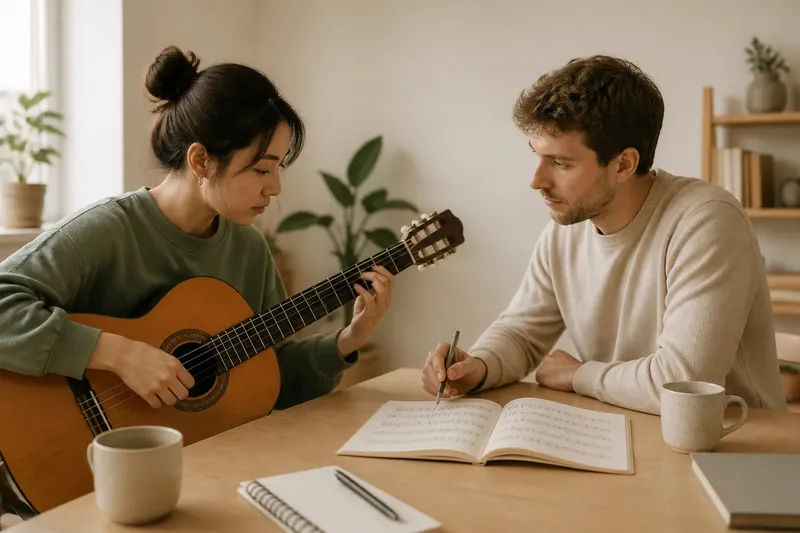
In person, a teacher can respond to what a learner is watching. If a beginner studies a potter’s hands but misses the clay’s changing sheen, the potter can point it out or demonstrate again. Questions, corrections, and small decisions can happen as the work unfolds.
That access depends on a particular teacher, place, and schedule. Instruction may also be uneven: one maker explains each choice, while another expects a beginner to infer it. Shared work offers opportunities to ask questions, but it does not make every part of a craft easy to see.
What can an online craft tutorial show?
A recorded lesson can make a specific demonstration available for replay. You can pause a hand-stitching video to inspect a seam or return to the moment a printmaker aligns paper with an inked screen. The camera offers a view of the task, but its framing determines what enters that view.
A close-up might show a blade cutting linoleum while cropping out how the maker steadies the block. A polished sequence may omit setup, corrections, and material changes. The hands can be visible while the reasons behind their movements remain unexplained.
Good instruction makes those reasons easier to notice. A maker can narrate why they switch tools, what texture they are watching, or what would prompt them to stop. Showing preparation—testing fabric scraps, cleaning a brayer, or arranging tools—can also clarify the conditions around the main action.
How can you judge an online craft tutorial?
- Check whether the material is visible before, during, and after the action; if a key change is hidden, choose a lesson with a clearer view or look for a separate demonstration of that stage.
- Check whether the teacher names the cues guiding a decision; if the lesson shows only hand movements, choose another explanation or treat the movement as a starting point rather than a complete method.
- Check whether a correction appears on screen; if the process looks uninterrupted, look for a lesson that shows adjustment or plan to seek feedback from a knowledgeable maker.
- Check whether the teacher identifies the materials and conditions used; if those details are missing, seek a better-specified lesson or proceed cautiously with a small practice piece.
- Check whether the camera shows how the work is held and supported; if the framing hides that setup, find a wider view before copying a movement that depends on it.
- Check whether the lesson gives context for a technique and credits its sources where relevant; if it presents a method without context, seek an account that explains its origins and adaptations.
What questions help you choose a craft tutorial?
Can I see the material change?
Look for a view that shows the material before, during, and after the action. In paper folding, the position of the fingers and the resulting crease may matter more than a polished reveal.
Does the teacher explain what they are noticing?
Useful instruction names the cues behind a choice, not only the movement itself. A sewing teacher might explain how fabric drag affects the way a seam is handled.
Can I see a correction?
A correction can show how a maker responds when the work shifts from the intended path. Look for an adjustment, such as realigning a screen or smoothing a wrinkle, and listen for why it was needed.
Does the lesson say where its method may not apply?
Paper, clay, and fabric can behave differently across materials and working conditions. Prefer instruction that names what it demonstrates and leaves room for adaptation.
What does a video leave out?
A recording cannot convey every sensory cue. It may show glaze being stirred without conveying its feel on a brush, and it may not show how changing light affects its appearance. A video can also detach a technique from the tradition or workshop where it is used.
Those limits do not make online teaching useless. They make it one source of instruction rather than a complete account. Teachers can add context by naming traditions, crediting teachers, and explaining adaptations. Learners can ask what the frame does not show instead of assuming a tidy demonstration covers every condition.
Not worth the effort: searching for a tutorial that removes every uncertainty before you begin. No recording can anticipate every material or workspace. Look for a lesson that makes its choices legible, then pay attention to how your own materials respond.
How can you use a tutorial without copying blindly?
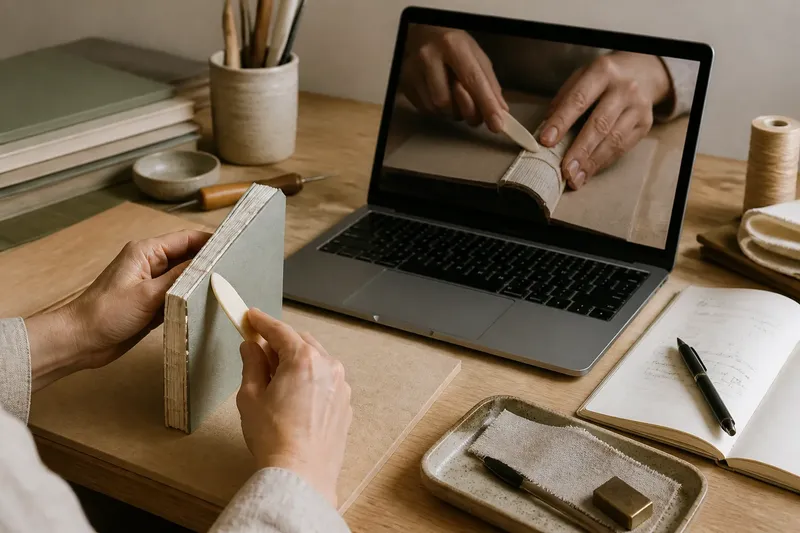
Say you want to learn how a bookbinder rounds a spine. Imagine your starting materials are a practice book with a soft cover, a bone folder, and a video demonstrating the process on a firmer-covered book. First, note the teacher’s stated aims: shape the spine, keep the text block aligned, and control pressure. Next, watch where the tool meets the book and which cues the maker checks. Then try the demonstrated movement gently on your practice book, stopping to inspect its shape and alignment. If the softer cover shifts or resists differently, do not force the same pressure; pause and seek an explanation suited to that material. The result is a clear tradeoff: the video can clarify sequence and purpose, but its exact handling may not transfer to your book.
For another pass through a lesson, write down four things: the tool, the cue the teacher watches, the decision that changes the process, and any condition that differs in your workspace. If a local class or knowledgeable maker is available, bring one precise question from the video. That gives the conversation a useful starting point without asking someone to translate an entire craft at once.
For teachers, a recording can preserve a demonstration for people who cannot attend in person. Its value need not rest on a flawless sequence. Showing where attention goes, when the maker pauses, and why they change course can make judgment part of the lesson.
When choosing how to learn a craft, compare the kind of help each route can provide: shared work allows questions and feedback in context, while an online craft tutorial lets you revisit a particular view. A useful next move is to identify the cue you still cannot read—such as pressure, texture, or alignment—and seek instruction that makes that cue visible or gives you a person to ask.